Showing posts with label best of 2007. Show all posts

Thursday, February 28, 2008

Link 2: Dick Hyacinth's 2007 Metalist

Go check out Dick Hyacinth's metalist of the best books of 2007. He took as many lists as he could, gave each reviewer an equal number of points (so books ranked high on shorter lists got more points than those on longer lists) and added up the points--using a mathematical formula I came up with. I'm a bit of a math geek sometimes... and it was a good way to kill half an hour. The list is interesting for a number of reasons, but here are some of my thoughts:

* Two books in my top ten made the meta-top ten, which is pretty decent. I do regret not including Perry Bible Fellowship: The Trial of Colonel Sweeto in my top ten, though. It should have been there.

* Six of my top ten made the top 100. But then again, I didn't really expect The Boys, Thunderbolts or Gødland to make the meta-top 100. Am a little surprised that The Nightly News didn't make it as it got a lot of praise when it came out. But then again, I think it made my list partly because I got it in December, which meant it was still recent in memory for me. Had I gotten it in the summer, I may have forgotten about it. Not to say it didn't deserve its place, but stuff that's more fresh in your memory is going to have a better shot at the list.

* Three of my almost-top-ten books made the meta-100.

* Casanova is only #35? What the fuck?

* Dick is almost certainly right when he says that ACME Novelty Library #18 would have ranked higher than 52 had it come out a little earlier in the year, especially in the direct market. I got my copy in a bookstore weeks before Diamond shipped it. Plus, how many of the lists Dick looked at were made before the end of 2007? One of my biggest pet peeves are lists created before the year is over for reasons like this.

* I still don't get you people's weird love of All-Star Superman.

* I've read six of the top ten and plan on getting at least another two for sure, probably three. The only top ten book I have no interest in is Buffy Season 8.

* Interesting to see that a book like Y the Last Man ranked so high thanks to non-comics sites. Is this a case of comics sites not liking it or that it's a book that was taken for granted? I've yet to read past the first trade (which didn't do much for me), but I imagine there are a lot of really good books that got passed over simply because everyone is so used to them. Perhaps demontrated by Jack of Fables making the meta-100 while Fables didn't? The newer spin-off ranks because it's more fresh? (Or it could just be a better book...)

Others can almost certainly come up with better things to say about this meta-100. But, go check it out, see how some of your favourites rank with the collective comic criticism community.

Again, regular Thursday post coming later.

Sunday, January 06, 2008

Best of 2007: The Top Ten

Wow, the top ten books of 2007. Now, if you've been reading this blog all year most of my choices won't seem that surprising. There are a couple of books listed here that I didn't discuss because I got them within the past few weeks, knew they would make the list and didn't want to have to come up with twice as many great things to say about them. I'm lazy like that. Without further blathering, let's do this...

10. Gødland
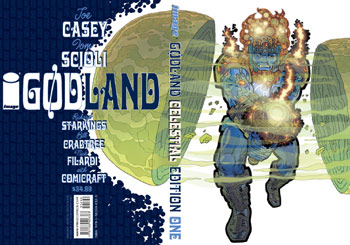


For a while, I had this and The Black Dossier listed at the tenth spot, not knowing which to go with. In my discussion of The Black Dossier, I touched in the issue of energy and, let's face it, Joe Casey has energy. His books just scream energy, that he's writing the scripts at a frantic pace, gleefully laughing and just having the time of his life. Especially his creator-owned stuff like Gødland. This is Joe Casey and Tom Scioli doing Kirby Kosmic with a whole lot else thrown in. While the second year of this book hasn't been as strong as the first, it's still a fantastic read month in, month out (when it ships).

Not only that, but 2007 saw the release of the deluxe "celestial edition" hardcover collecting the first twelve issues of the book along with various extras including the usual sketches, development material and some nice words by the likes of Grant Morrison and Tom Spurgeon. If the regular issues didn't quite get the book on the list, this book did. Not exactly playing fair I know.

Gødland is all about Adam Archer, the first man to land on Mars and the fact that he came back with superpowers. This year featured stories revolving around a trio of cosmic baddies bent on destroying the planet--and fighting their growing human emotions--two recurring bad guys hunting down another, and Archer's attempted assassination by the US government because he won't shut up and do as he's told. It's classic superhero fun that recalls the Stan and Jack days if only because the book is done "Marvel style" with plot, art and then dialogue, which means some of the dialogue has that forced feeling, but Casey usually makes it work in his weird way.

All they need to do is get this book back on something resembling a monthly schedule and I'll be happy.

9. The Boys
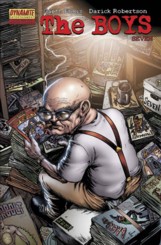


Alright, more than any other book on this list, this book really isn't for everyone. The Boys is very much a hit or miss depending on your sensibilities. If you're a fan of Garth Ennis' work, odds are, you'll like this--but, even then, only if you have no problem with a Batman stand-in facing himself with the urge to randomly fuck things... anything really, not just people. In fact, if you find that a little funny, then, yeah, this book is for you.

The Boys follows a group of government agents (although that probably brings up the wrong image) whose job it is to keep the superpeople in line. The main arc of this year had them investigating the death of a young gay man, quite possibly at the hands of "Nightwing" who may or may not be gay.

Now, there are a lot of crude jokes at the expense of superhero and while I enjoy those, what gets me here, like with most of Ennis' work, is the basic humanity displayed. Ennis wisely uses Hughie as our way into this world, because he's a decent guy who is in this position because something horrible happened to him. He has no grudge, no taste for cruelty, he just wants to make sure that no one else is hurt the wa he was. And, ultimately, that's what this book is about: the horrible danger that superpeople present and the fact that, no, they aren't all great people like Superman and Spider-Man. And, sometimes, they need to be kept in line.

Oh, and Darick Robertson is on art and, my god, can that man draw. His art is the perfect complement to Ennis' writing here as Robertson can shift between parody and sincerity with ease.

8. Thunderbolts
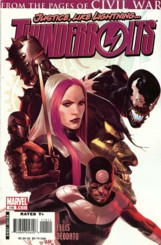


A government-sanctioned group of supervillains charged with hunting down superheroes who won't register is, well, a very, very retarded idea. If you sat down and thought about seriously implementing an idea like that, you would come to conclusion that villains wouldn't work well together, would wind up causing lots of death and destruction and, most likely, get their asses handed to them, because when do the bad guys ever actually win? Thankfully, that's the book that Warren Ellis writes. Thunderbolts changed directions a bit because of the Civil War "fanboy orgasm" moment where Tony Stark reveals that he's had the great idea of using villains to hunt down unregistered heroes, but the book tself does everything it can to critique and demonstrate that no one in their right mind would ever think to do something so stupid.

The team is run by the former Green Goblin, Norman Osborne and he's quite insane. It consists of a man whose sword handle is made from his dead sister's skin as that gives him special superpowers, a demented wannabe hero, a radioactive communist, a scheming sex-addict, a thug in a murderous alien suit, an S&M emo former teen hero, and an utterly insane assassin. Gee what ever could go wrong.

These guys have a problem taking down Z-grade heroes, because they don't have any teamwork skills and are lead by crazy people.

One of my favourite moments is when American Eagle just beats the shit out of Bullseye, because while Bullseye can hang with regular people, someone with superpowers is out of his league. This is after Ellis has built up how crazy and dangerous Bullseye is--he kills people with popsicle sticks and needs armed guards around him at all times.

As well, Ellis infuses the series with various portrayals of the media since the Thunderbolts is a PR exercise--so we get commercials for Thunderbolts action figures (as they fight the evil Captain America) or adds for a TV show about people trying to become a Thunderbolt or the next Captain America.

Not only that, but Mike Deodato's art is great here. A little too reliant on photo references at times, but I'm digging on it. Bonus points for reuniting the team that blew my young mind with Thor #491-494 and made me the Ellis follower I am today.

7. Shortcomings
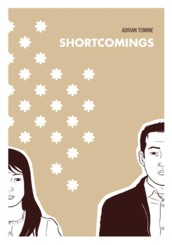


I picked this up on Christmas Eve since Chapters was having a "buy 3, get 1 free" sale and I'd seen it around, heard all of the good things and, for some reason, just didn't get it until then. God, what a fucking stupid move. Usually, my instincts are pretty good, I can look at a stack of books/movies/CDs and pick out the good ones, but I almost blew it with this one. A fact I'm almost ashamed to admit: this is the first (and only) thing by Adrian Tomine I've read. Pretty stupid as the guy is good.

Shortcomings is all about Ben and his problems with women, namely the issue between Asian and white women. Ben is an Asian-American dating another Asian-American, but, apparently, wants to have sex with a white woman (although it's a little more nuanced than that). Tomine's writing is subtle and is full of well-rounded, seemingly complex characters. None of them come off as stock types, all do things that are stupid, mean or just plain contradictory. I'll admit that the fact that the book's lead is an underacheiving asshole won a few points.

I was also really impressed with Tomine's art. It's very clean and... sparse isn't the right word... maybe economical? He gives enough detail to make it look real, but also doesn't go overboard. He sticks to three tiers, creating a very easy-to-follow flow and steady pace.

I'm definitely going to have to check out his other work now.

6. ACME Novelty Library #18
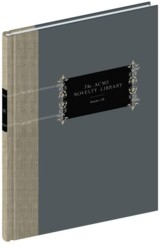


I was a little disappointed that this year's issue of ACME Novelty Library didn't continue the "Rusty Brown" story from the previous two issues, but Chris Ware delivered on this new story. First off, let's just get his art out of the way. No one does the "cluttered," information heavy layout like Ware and he uses a very cartoony style that really works well. I particularly like the layouts of a couple of pages that show the main character in various layers like a medical textbook (which relates to what she's doing).

But, what got me here is the story. The young woman lead (only identified by nicknames--unless her name actually IS Nana, which I doubt because she's only called that while working as a nanny) is an amputee, missing part of her leg just above/below the knee. She once had a boyfriend and now she doesn't. She's very lonely. She used to be a nanny, but that didn't work out. Now she works at a flower shop. I guess I'm a bit of a sucker for these sad, lonely people stories, especially when as well-done as here. Ware does an excellent job of slowly revealing her story and her past, not giving too much away too soon, but also making sure it flows well. There are a few pages where it goes off the rails (usually accompanied by his more ambitious and confusing layouts), but, for the most part, it's a very engaging story. It will depress the hell out of you, but that's what Chris Ware does.

5. Captain America


Like everyone else, I'm really surprised at what holding this book back was, well, Captain America. Before Steve Rogers' death, this book was good, but, now, it's great. The fall-out of his assassination has been fantastic as Brubaker transformed the title in an ensemble piece of Cap's friends, allies and enemies, all reacting in various ways to his death.

Hell, I want to mention the art right away, too, because the work done here by Steve Epting and Mike Perkins blows me away. Compare Epting now to Epting mid-'90s Avengers and tell me that guy didn't, basically, become a whole new artist. Both of these guys deliver realistic, moody art that works at telling the story just as much as the writing.

One thing that really impressed me in this book is how Brubaker handles Tony Stark, because you would think, given the two sides of Civil War, that he would be almost a vaillain here when he's handled with a lot of respect and treated like a good guy doing what he thinks is best. Bruabker manages to rise above the "us/them" mentality that most of Marvel's output is stuck in, and shows that it isn't a right/wrong issue, but a difference of opinion, of viewpoints.

And what can I say about the Winter Soldier? Brubaker constantly surprises me with this character, but never does anything that doesn't make total sense. That's a really tough thing to do, to remain so consistent while surprising.

Quite possibly the best ensemble book out there right now (except for maybe my number one choice... and maybe number two, too... ah, fuck it, it's really good, whatever).

4. The Nightly News
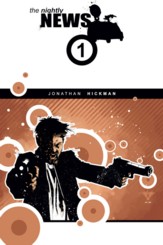


I knew some people in high school who would have read this book, like, fifty times and quoted it and totally missed the point. You bet your ass they loved Fight Club and annoyed the hell out of me. But, that aside, this is one fine comic book magazine. Jonathan Hickman uses graphic design to tell this story rather than traditional comic art and it really works.

Basically, there's a cult that is killing off media figures, because they are the propaganda arm of the corrupt capitalist state or something like that. Normally, I'd be rolling my eyes because it's just so over-the-top, but Hickman makes it work somehow. I actually don't know how he does it, really. It's just one of those things where the right combination of elements produce a work of stunning beauty and skill. This isn't like any other comic out there right now.

Hickman manages to sneak in a lot of facts about the world, politics and the media, which really grounds the story and does make you want to side with the cult (or at least agree with some of their motivations). My favourite little jokes were how every issue had a little disclaimer from Hickman to warn us that he doesn't agree with the violence his characters enact and gives us a few reasons why he's a decent guy--except they become more deviant and "wrong" as the series progresses. Always made me laugh.

It's the best rant-as-comics of the year no doubt.

3. Iron Fist
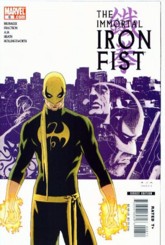


The book that combines the two writers whose work I probably enjoyed the most this year, Ed Brubaker and Matt Fraction, and my favourite artist of the year, David Aja. Kung-fu billionaire, people!

Aaaaaaaaaand, you don't know this, but this book just dropped a spot. Originally, I had it here at number three and then switched it to number two and just now switched it back, because, well, issue seven wasn't that great. It was a good attempt to expand on the Iron Fist legacy, but... meh.

But, ignoring that issue, this comic rocks. It's full of wit and action and emotion and pain and hope and desire. This book is what the Mortal Kombat movie wanted to be, especially the most recent arc where the immortal weapons of the seven kingdoms all fight in a tournament--and, in his first fight, Iron Fist loses. Got his ass handed to him by Fat Cobra who we all love. And then there's Luke Cage, Misty Knight and Colleen Wing, who are all in other books, but kick ass here as Danny's back-up. Them fighting Hydra guys in issue six is pure magic, especially Misty yelling "Say 'Hail Hydra' one more time!"

I got the Essential Iron Fist before Christmas and just have to wonder, though, why Brubaker and Fraction don't use second-person narration. The book began that way and I think it could really work. But I digress.

David Aja is my favourite artist of the year. Everyday, I go to Newsarama and expect a news item telling me that he's been pulled off this book and put on Amazing Spider-Man or X-Men or New Avengers, some big franchise book, because he is just so goddamn amazing. He draws hand-to-hand combat in ways I didn't think possible while evoking mood and body language... there's a moment in one issue where Danny comes face-to-face with the previous Iron Fist and has his arms up, ready to fight and the way Aja draws that just amazes me every single time. It's... wow.

I really wish I was reading this book in trade form because whenever I finish an issue, I want the next one right now. But, it's also so good that I couldn't wait that long. Damn. It's an awesome book, read it.

2. Criminal
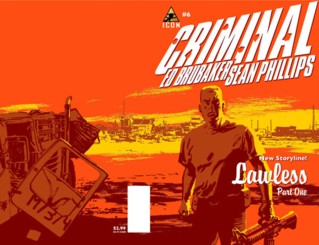


I think this book was what got me into watching and reading some noir stuff this past year. I'm also doing lists of the books (like prose books) I read this year and some of my favourite DVDs and there's a bit of noir on both, mostly Raymond Chandler. And I believe the quality of this book is what got me to dip my toe into those waters.

While I really enjoyed this book's first arc, the narration and construction of the second one, "Lawless," just blows me away. The third-person narrator Brubaker uses in it is fantastic and really works with the story--and is different from a lot of narration out there. I'm actually surprised we haven't yet seen some imitators who are realising just how good third-person narration can be. For the past several years, it's really just been first-person or location captions, not much else.

And Sean Phillips... what can you say about an expert craftsman doing the best work of his career? I don't know. I really don't. I tend to focus on the writing of comics because I can fake my way through, pretending like I know what I'm talking about, but here I just can't. Phillips is almost certainly doing things in every issue that I don't pick up on and that's a shame.

As well, I love the bonus stuff at the back. The text pieces on noir films has made me pick up a few and have several more on the list. I don't always read those pieces right away, but that makes it better, in a way, because it's always a nice surprise later.

The actual plots of Criminal aren't anything spectacular, this is a book more about style and craft. The characters are solid, as are the stories, but it's the way that the stories are told that wow me. But not as much as...

1. Casanova
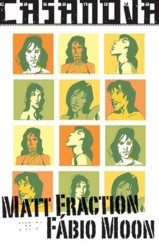


I hate doing "best of" lists, because there are only so many ways to praise stuff. I've run out of adjectives and here we are at the number one spot. I guess the only way to really praise this book is to remind you of all of the great things I said about those other books and then point at this one and say, "This one beats them." Casanova tops my list and it had some stiff competition. Take all those other adjectives, combine them and then, like, add four and you'll have how awesome this book is.

First, Fraction and Gabriel Ba ended the first storyarc in a hugely epic way (giant robot), setting up a second arc that has defied all expectations. "When is Casanova Quinn?" Like Captain America, this book took the lead out of the book and it's, somehow, become even better than before. The focus has shifted to Zephyr Quinn and Casanova's old buddies, now at odds and... well, I dunno what else because that's how far the story's gone. But there's sex and violence and lesbian sex and witty dialogue and new great art by Fabion Moon and BLUE! Bright bright blue colours that I love because I love blue.

Not only that, but every issue is 16 pages. Fraction and Ba/Moon do in 16 pages what most comics spend 22 pages not doing. Throw in Fraction's great backmatter essays and this is a book I save for last whenever I get it because I want to end on a high note. I totally love this book and if you aren't reading it... I just don't know how to finish that sentence properly.

I really wish I could think of more things to say, but there are just so many ways to call something great.

And that about does it for the top ten list. Hope you found it entertaining or worthwhile or, hell, baffling. As well, you'll want to check out the "best of 2007" lists at a few blogs worth checking out (although, as of right now, they're not all up, so keep checking back and reading them): Timothy Callahan's blog, Marc's Comic Hut, the Legion Abstract and Geoff Klock's blog. Compare, contrast, note what books get a mention at each place and maybe give those books a shot. I know I'll be picking up a few things based one what they've said already.

Saturday, January 05, 2008

Best of 2007: The Bottom One

Okay, I was planning to do a bottom five list of the worst comics I read this past year, but realised that three of the books were mostly just mediocre pieces of shit and the other was too fresh for me to jump on the bandwagon with everyone else. So, that leaves one book. It may surprise you, it may not, and it shows just how fucking retarded I am since I bought the entire things, but the honor of the bottom one goes to...

New Avengers: Illuminati

That's right, folks, the book that looked the history of the Marvel universe in the eye and promptly blew a load into it. I reread this... gem of a series last night and, wow, seriously?

I had high hopes for this five-issue series since I like the idea of the Illuminati, a secret group of heroes that have worked behind the scenes, secretly guiding the post-human community in specific directions and doing cool shit. Except they don't do cool shit, they do retarded shit that is Bendis just putting the pieces in place for the upcoming Secret Invasion storyarc in the most clunky, nonsensical ways possible.

The first issue takes place right after the end of the Kree-Skrull War with the Illuminati paying the king of the Skrulls a visit to tell him that if he tries anything again, they will fuck him up good. And, to prove they're serious, Black Bolt speaks and blows up the king's ship. Except--and forgive me if I'm taking this a little too seriously--the vocal blast powerful enough to blow up a giant spaceship DOESN'T ACTUALLY HARM ANY OF THE SKRULLS WHO ARE STANDING FIVE FUCKING FEET AWAY! Right there is the first example of why this series is such horrible crap: it doesn't have any sense of consistency or logic. I simply can't figure out how that works at all. I can usually overlook a lot of stupid shit in superhero comics, but that still leaves me gesturing wildly while shouting out half-formed sentences like "What the--why doesn't--Black Bolt should--BAD GODDAMN WRITING GO AWAY NOW!"

The second issue didn't bother me that much when I first read it, but I've since read a shitload of Jim Starlin comics and now I have a serious fanboy hatred of issue two. In that issue, Reed Richards gets the Illuminati to help him gather up the Infinity Gems, of which he already has three including the Soul Gem. Now, I don't know about you, but the last time I saw the Soul Gem, Adam Warlock had it (looking on Wikipedia, I see that sometime since Thanos #6 he may have lost it--in an issue of She-Hulk maybe?) and now Reed just has it. What? That's like if they were collecting mythical items and he just had Thor's hammer, no explanation given. It's just, "Oh, he has that, I'm sure there isn't a story there at all."

There's also the fact that the Infinity Gems don't work together to form the Infinity Gauntlet. At one point, one of the Illuminati members says they thought the case and Reed responds "Says who?" (Oh god, I am feeling so fucking fanboyish right now.) Um, says the Living Tribunal. Fuck off. So, when Reed makes the Gauntlet work at the end and the Watcher shows up, all freaked out... it kind of doesn't make any sense. It makes absolutely no sense.

Then there's just the small little mistake where the writers seem to understand and support past events while contradicting them right on the same page. Namor mentions how they (the heroes--although, as I've pointed out, these heroes mostly did shit-all anytime the Gauntlet was used) stopped the Gauntlet from being used twice (The Infinity Gauntlet with Thanos and The Infinity War with the Magus), but then Reed mentions how the last time it was used, he ceased to exist--except that was the first time, not the second. It's little minor shit like that that make it hard to actually forgive Bendis and Reed's rewriting of past events, because they don't seem to know what version of events they're adhering to.

Issue three is the infamous Beyonder issue where we learn that the Beyonder is really an Inhuman. No, wait, a MUTANT Inhuman! Since I have no attachment to that character, no fanboy freak-outs. I should point out that I am bothered anytime a group like this gets together and confronts a superior form of life and tells it that it shouldn't interfere with anything because they know better, which the Illuminati do here. The problem there is that the Beyonder has just as much a right to interfere with things on Earth as any of them. Saying that he isn't natural implies that both Inhumans AND mutants aren't natural and should just fuck off to space. Just saying.

I did a long post on issue four previously that saves me the effort to repeating everything wrong with that issue. At first, I was simply going to give the honour of worst comic of the year to this issue since it bothered me so much, but then I thought about the entire series and realised, yeah, the entire thing sucked.

Which brings us to the final issue where Skrullektra's body becomes an issue and Black Bolt is revealed to be a Skrull. I still don't know why exactly he revealed himself like that. Actually, I think that's the biggest flaw of this series, really: I kept reading issues and not understanding why shit was happening. There were no motives, no logic and... GAH! Goddamn.

Thinking about this series today, it became clear that the every issue did at least one of two things: set up the Secret Invasion or hinted that Black Bolt is a Skrull. Issue one showed the pissed off Skrulls and them stealing DNA samples from the heroes (as well, they never actually break Black Bolt out of his cell, he just kind of shows up). Issue two probably suggests that the Infinity Gauntlet will play a part. Issue three hints that this Black Bolt is a Skrull because he doesn't remember the Beyonder's transformation in the terrigan mists. Issue four sets up Noh-Varr as the next Captain Marvel and a Kree/Earth alliance, of sorts, against the Skrulls. And, issue five is the first part of the crossover (officially).

Except was the series ever billed as being such a strong lead-in to that crossover? Wasn't it supposed to just be all about the Illuminati's secret actions between the stories we knew? What about rewriting said stories? What about two characters contradicting one another's version of events, but both being viewed as facts?

I'm sure there were worse comics than this series released in 2007, but I didn't read them. And I really wish I hadn't read these issues.

Tomorrow, my top ten books of 2007.

Thursday, January 03, 2008

Best of 2007: Beyond the Top Ten Part 2

And so we continue the build-up to Sunday's top ten list with a few more books that I really enjoyed, but just didn't make the cut for whatever reason. Sure, this is just a way to recognise more than ten books, but whatever, all in good fun, eh?

Midnighter

Twelve months, twelve issues. Out of the various books I buy on a regular basis, this may be the only one that went twelve for twelve in 2007 and, let's be honest, that goes a long way in this age of "maybe ten issues a year." What keeps it from the top ten is really just the fact that the quality isn't top ten. This is a solid superhero book that I always enjoy, but it's just good, not great. As well, 2007 suffered (in my opinion) from the period between Garth Ennis and Keith Giffen's runs where there were three self-contained issues by Brian K. Vaughan, Christos Gage and the writing team of Jimmy Palmiotti and Justin Gray. While those issues were good (especially the BKV one--a very interesting story told completely in reverse to play on Midnighter's ability to see a fight in his head from beginning to completion before the first punch is thrown), they didn't contribute much to the book and its direction.

2007 gave us four issues by Garth Ennis, three completely the story where Midnighter is sent to the past to kill Hitler. This story was good, very "Ennis," but not much else. It had the advantage of being a defining Midnighter story in that its goal was to hammer home the point that Midnighter is a killer, not a hero or a radical or a revolutionary--he kills people. Thankfully, the writers after Ennis used this trait and often played against it. Gage's story had Hawksmoor challenge Midnighter to do something that worked against his killing ways--but the story quickly became an excuse for Midnighter to fuck shit up. There must be a temptation to turn Midnighter into a Batman-type of hero where he's unique.

As well, Keith Giffen's debut arc has been interesting in its attempt to explore Midnighter's life before he became this unstoppable killing machine. The story has been a bit choppy, though, sometimes going off on weird tangents that slow things down a lot. The next arc, involving an arch-enemy tailored for Midnighter proves promising, so maybe this book will make the cut next year.

The lack of one artist hurt this book a little, but, at least, the self-contained issues featured guys like Darick Robertson, Jean Paul Leon and Brian Stelfreeze. If only the larger arcs could keep a single artist to maintain cohesion. So far, Keith Giffen's run has had five issues with four artists and that's no way to do a book like this.

Midnighter is a good read and definitely the "almost made the top ten of 2007" book most likely to make the top ten of 2008.

I Shall Destroy All the Civilized Planets

What keeps this fantastic collection of Golden Age comics by Fletcher Hanks out of the top ten is the enjoyment factor. This is an important and worthwhile collection of comics, but the antiquated sensibilities and stories don't do it for me the way modern stuff does. I know, I know, but that's how I feel.

Nextwave: Agents of H.A.T.E.

Only two issues of this series came out this year. Now, those two final issues of the series were glorious in their madness and fucked-up-ness, but two issues don't cut it.

The Order

Okay, this book is Midnighter's biggest competition for a move from "the almost top ten of 2007" to the top ten of 2008, I think. A slow start is what keeps this book off out of the top ten. However, this is a very well-written, well-drawn book that demonstrates that Matt Fraction is most definitely Marvel's future superstar writer. Up until this point, he's done very off-beat, very wacky comics that are great, but haven't demonstrated his ability to be a leading writer that could handle a franchise book. The Order does that as he juggles a large cast of very heroic, very ultruistic characters that are in very Marvel-esque situations like fighting Communist supervillains and getting evicted from their headquarters. Also, Fraction is very well-represented in the top ten and he really doesn't need another book there.

On Saturday, I will post my bottom five of 2007.

Wednesday, January 02, 2008

Link Catch-up

I wanted to catch you up on some reviews I've written in the past month for Playback St. Louis, a local website which does reviews of everything, including comics:

I did a highly unfavorable review of The Weirdly World of Strange Eggs;
a sneak peek review of the first issue of The End League;
and my own top 10 lists for 2007, one for graphic novels and trades and one for comics published in individual form this year.

The GN list is a bit of a cheat, seeing as how three of the books on the list (Shortcomings, Paris, and The Other Side) I actually read in individual issue form this year instead of in trade. But they still deserve their places, dammit.

The only caveat is that I wish I had read Exit Wounds sooner (I just read it and am writing a review of it that will hit the site on Friday) because it would have placed about 4th, bumped everything down and knocked Elk's Run completely off the list.

Tuesday, January 01, 2008

Best of 2007: Beyond the Top Ten Part 1

Since it's now 2008 and I'll be doing a "best of 2007" thing with some other bloggers soon, I figured I'd put aside the Joe Casey stuff for this week and, in its place, mention a few books each day that didn't make my top ten, but would be in the top twenty.

The League of Extraordinary Gentlemen: The Black Dossier

Technically, both writing and art, this book should be top ten. In fact, it was on the list until this morning, listed at the number ten spot with another title as I was unsure which to include. Then, I thought about it a bit and it came down to this: I enjoyed the other book more. If The Black Dossier had a giant fault, it's that I didn't enjoy it as much as the other ten books that made the cut. Like I said, it is technically impressive, but it's not fun. You can tell that it's supposed to be fun and contain a lot of energy, but that's not Alan Moore's strength. One of the reasons why I enjoy works by lesser writers more than that of Moore is the fact that almost everything he's done (that I've read) comes off very stiff and sterile, very planned and meticulous, and totally lacking energy. That isn't necessarily bad as Moore's stuff is usually fantastic, but I like energy in my comics, music, movies, books, etc.

The Black Dossier raises the question of fan fiction since, let's be honest, that's all The League of Extraordinary Gentlemen is in a sense. Someone made a comment when this book was being discussed on some site (it was actually in the comments section, which is why I can't be more specific, sorry) that, at this point, most of the mainstream comics market is fan fiction. That got me thinking since usually the line is ownership; it's not fan fiction if the owner of the property is allowing you to write it. But, since Moore is using public domain characters, wouldn't that mean everyone (and therefore no one) owns them, making it legitimate, in a way?

Fuck, that reminds me, I was just reading something in the past month and I can't remember what. It was all about how contemporary writers use allusion to create resonance, which is the current hot thing. Instead of just creating something new and worthwhile, they give their work "meaning" by referencing other pieces of art--in a way, piggybacking on those other works in an effort to gain credibility. It sort of relates here, I think. Of course, I don't agree with allusions being bad--in fact, I'm one of those people who like them--so long as the work itself stands up on its own. Shit, I really wish I could remember where I read that. I'm getting forgetful in my old age.

Doctor 13: Architecture & Morality

I'm still puzzled why this book didn't wow me more. It's got an offbeat sensibility, witty writing, fantastic art, and all sorts of of metafictional shit. And yet here we are, not in the top ten at all.

I think one thing that bothers me (and it shouldn't) is the inclusion of Grant Morrison among the Architects, mostly because he's always been the sort of creator who loves to bring back the old goofy characters that seemingly don't fit in anymore. I know, the jabs at the four guys behind 52 weren't serious, but it, strangely enough, took me out of the book. I was like, "Um, yeah, no."

It could also be that I don't like Doctor 13. The character is a representation of every bullheaded whackjob that refuses to recognise reality because it would fuck up his worldview. It's hard to root for a guy who is staring at a vampire and goes "Vampires aren't real." You kind of want big things to fall on his head.

Since my main criterion for the top ten is enjoyment, those two things are enough to fuck it up.

DMZ

I'm buying this in the trades, but volumes two and three came out this year and were quite good, just not good enough. The second volume, in particular, got me, but the third didn't so much. I really enjoy this series and look forward to each collection, but I have a feeling this will work better as a whole and, sometimes, the little storylines don't work as well on their own.

More near-misses on Thursday.