Showing posts with label chris ware. Show all posts

Monday, January 28, 2013

Best of 2012: The Top Ten Comics of 2012

My top ten comics of 2012...

10. PRISON PIT BOOK FOUR BY JOHNNY RYAN! Book two made my 'best of the year' list, while book three did not last year. What makes book four of Prison Pit so worthy? After all, you'll see that a lot of big, important, fantastic comics did make this list. Yet, a comic about depraved violence does? Mindless, brutal violence with no redeeming value, some might even argue! I wouldn't be one of those people. I love fake violence. I read superhero comics, watch professional wrestling, and love me some Prison Pit. I love Johnny Ryan's imagination. While there is an element of "If you've read one Prison Pit book, you've read them all," that's not true. Because he surprises in every book with the ways he does the same sort of violence in new ways. The ways in which he keeps himself and the reader from being bored at a little bit more of the old ultraviolence. The ways he comes out with new monstrosities and new conflicts for Cannibal Fuckface to deal with, each bigger than the last. Each seemingly more hopeless.

Book three ended on a cliffhanger that left me wondering "What next? How can Ryan get CF out of this? WHAT HAPPENS TO PRISON PIT NOW, YOU BASTARD!" And, then, here we are, and CF gets out of it in a clever, entertaining way. Recently, I've become fascinated with the way writers will create seemingly impossible situations for their protagonists and, then, get them out of it. I love that stuff. And, like most fiction, that's all Prison Pit is at its core: Cannibal Fuckface gets into a seemingly impossible situation and, then, gets himself out. Usually, it's a big, monster of a foe that he has to kill in a bloody, disgusting way. We've seen him eaten by an enemy... and break his way out. He's set on a collision course with a former enemy in this book and the end of this book is... well, you have to see it to believe that someone would make a comic like this.

And I love it.

I spent a lot of time after getting Prison Pit book four flipping through it, letting Ryan's art just sit in front of my eyes... His messy blacks -- pages covered in black inky blood! That splash page where you can hear the metallic score reach a high mark in the background as CF stands with a sword, head and torso covered in blood as he demands another guy's boots and kneepads. It's pure fucking heroic storytelling! THIS IS COMICS!

9. SCALPED BY JASON ARRON, RM GUERA, AND OTHERS! Scalped released its final six issues in 2012 and I had a chance to read the entire 60 issues over the course of a week. It is an impressive work, especially in its final six issues. Jason Aaron doesn't give us a clean, easy conclusion. It's messy and awful and ends in a way that I hate yet respect and understand. It wasn't a book that was going to end in a way that satisfies, honestly. We all wanted a happy ending. After 59 issues of death and pain and struggle, all you really want is an issue where some peace and happiness can be found, especially for the book's lead, Dash Bad Horse. Scalped is an ensemble piece with the Rez acting as the star to a degree, but Dash is the closest thing we have to a protagonist and, fuck, I wanted him to get a win. I wanted him to be happy. I could live with everyone else getting fucked, but Dash? He did some awful stuff and I wasn't more happy reading this book than at the beginning of that final arc when he was happy and seemingly settling into a leadership role in the Rez. Not the leader, but someone who was finally looking beyond himself and his concerns.

But, it wasn't that kind of story. I should have known better.

I don't always (or often) get invested in characters like that. It takes something special to do it and Scalped had that. A big part of that was the art of RM Guera. It took some time, but I grew to appreciate and love his art. His work is so savage and sweet at the same time. There's so much passion in his line work and the way he builds pages. Even moments of calm (of which there are two or three over the couse of Scalped) have this energy that makes them seem like a page can barely contain them. His art is messy and grotesque in those best ways. His characters look like people and not -- exaggerations, but so specific and deep that they may as well be real.

Endings are hard to land in cases like this. How could that final issue live up to everything that the previous 59 issues promised? Hell, who wanted this book to end? We hate endings, because we don't want endings. Especially in comics. Comics don't end, they keep going forever! It's hard to really love an ending to a comic. Like I said, I respect and understand the final issue of Scalped... but I kind of hate it. Yet, this book makes my top ten comics of 2012 nonetheless, because it was still a damn good ending even if I hate it. Does that make any sense?

Every single one of these six issues released in 2012 were issues that I greatly anticipated and... they all delivered in their own way. They surprised me, they moved me, they entertained me, and they stuck with me.

8. ULTIMATE X-MEN BY BRIAN WOOD, PACO MEDINA, CARLOS BARBERI, AND OTHERS! This time last year, the Ultimate title that I was in love with was The Ultimates under the direction of Jonathan Hickman and Esad Ribic (it was my #7 book of 2011). But, Hickman and Ribic left that title for Avengers and Thor: God of Thunder, while Ultimate X-Men writer Nick Spencer was replaced with Brian Wood. What Wood did with the title was make it a book about a revolution, about a world where mutants are not just feared and hated, they are penned up and killed -- and just when it seems like they've won, like they've finally gotten their freedom, something comes along and all but 20 mutants decide to stop being mutants. Forget the 198, Wood made mutants a truly endangered species on the brink of extinction. And he made them unable to function as a single group.

That one-two punch of mutants coming together to fight against oppression and win only for humans to come along and find a way to snatch victory from the jaws of defeat... it was masterful. It was taking advantage of the Ultimate Universe in a similar way to how Hickman did the same in The Ultimates. Take some familiar toys and fuck them up, because... why not? He could never do this on X-Men, but Ultimate X-Men is a whole other story.

Kitty Pryde has been the protagonist and leader of the mutants... even though, now, a sizeable minority seem to want her dead, because she seems intent on playing nice with humanity. In the most recent story, the mutants invent a seed that can grow anything anywhere... and she decides to give it away for free. This, after President Rogers gave mutants a dead piece of land for their reservation. You can see why some would simply want to declare war on humanity and die taking out of a few humans. But, Kitty sees a better way. It's a more spiteful way, I think. A "You try to kill us? Well, we're going to solve world hunger. Fuck you." way. It's doing good in a manner where everyone will want to accept it and some will hate themselves for it. It's forcing humanity to embrace its hypocrisy.

What would someone do if they were in a similar situation? Wood is quite good at creating these dramatic, fucked up contexts and, then, exploring how people would act in them. How noble intentions can go wrong, how people will still insist on doing stupid things, and how things will usually wind up bad even when it seems they can't.

Honestly, what I keep waiting for is for Wood to be paired with an artist that can make his scripts sing like they should. This is a book that makes this like despite the art. It's rarely been bad, but it doesn't enhance and improve like it should. It's serviceable at best. The strength of Wood's writing -- and the way that writing like this appeals to me specifically -- carry the day.

7. WONDER WOMAN BY BRIAN AZZARELLO, CLIFF CHIANG, TONY AKINS, AND OTHERS! Earlier this week, I wrote that Wonder Woman often reads like the least Azzarello-esque thing I've read by Brian Azzarello. I stand by that. There's little in Wonder Woman or Orion that scream "Typical Azzarello!" but there's plenty that does. Like the way the gods play one another and vie for power. Or the way Azzarello writes dialogue with so much precision and playfulness. The most recent issue, for example, had the Wonder Woman/Orion stuff that didn't seem at all like Azzarello, but it also had the stuff in the bar that felt like the Azzarello we all know and are a little afraid to love.

While Batman seems like a more 'natural' fit for a guy like Azzarello, he's very suited to writing Wonder Woman. A pure character who has a dark, dangerous side. She comes from a violent, cruel world - the Amazons are warriors, their gods are spiteful... she can work within the dark side of things. She can think of dangerous, cruel things to do, because she has a noble cause. She clearly doesn't like doing certain things, but she will. She will doublecross gods and sacrifice herself to save a baby. She's a hero unafraid to do what it takes to protect life. Yet, it never feels like she's bloodthursty or as brutal as someone like Batman. There's a hope and optimism to the character that most don't have -- and it never feels corny like it sometimes does with the likes of Superman. She's a good person who will do bad things if necessary and that's pretty simple.

Wonder Woman had the best zero issue that I read from DC. Azzarello was so playful in the opening narration and used the conceipt in a way that clearly plays a big role in the story he's telling. Almost like a backstory he was aware of but wouldn't share unless necessary. A lot could be learned there.

The art on Wonder Woman is top-notch. Cliff Chiang brings the right sort of light, cartoony feel that helps soften Azzarello a little and make this work feel more like a complete whole than a mismatched writer/artist (it helps that they're not mismatched). And Tony Akins is a great fill-in artist, working in a similar style to Chiang. There's a very unified look to this comic and it's a strong, bold one. It's sort of what you want a superhero comic to look like.

The character designs really impress me as well. The looks of the gods are inventive while remaining true to their natures. Apollo looks nothing like you've seen him portrayed before... yet it doesn't seem wrong in any way. Hades is particularly inspired. And the Orion redesign is the best redesign of that character. Very true to Kirby's original while looking more contemporary in a way that isn't immediately dated. How did Chiang do it?

Tim, you should catch up on this comic. It's really, really good.

6. FURY MAX BY GARTH ENNIS, GORAN PARLOV, AND OTHERS! I picked the perfect summer to read American Tabloid by James Ellroy, didn't I? Ennis owes Ellroy a debt in how he's writing Fury MAX, but that isn't really what makes it such a great comic. Sure, grabbing a few things from a truly great piece of fiction never hurt. A lot of what Ennis does with Fury is stuff we've seen before in the few times that Ennis has written Nick Fury in the past. He's always written him as a hard man, cruel and lonely, but usually one who recognises his place in the world. If possible, Fury wants to make the world better and make sure as few innocents die. The closest we saw to him not doing that was in the first Fury series Ennis did -- and that was the point. The character had gotten old and desperate for something. Here, he's still young and all he wants to do his job well and make the world 'better.' Often, he learns that he didn't. There's a sense that this is a history of Nick Fury's failures. His self-delusion that he was a good person in any way. That his actions had any nobility. He leaved Indo-China in one arc on the side of a man, returns two arcs later to kill him. What changed? Politics. Is there a point? Probably not.

Parlov is one of my favourite artists to work with Ennis. He draws hard men well. He draws violence well. His Nick Fury is a man of stone that looks more cracked as we go on. Old Fury narrating... that man is unhinged but we see that only around the edges sometimes. This is a messy comic and Parlov captures that. Much like no one can draw Ennis scenes of two men shooting the shit in a bar like Steve Dillon, few can draw violent Ennis comics like Parlov.

If I did a list for 2013 (and I won't), this would make it again most likely.

5. PUNK ROCK JESUS BY SEAN MURPHY AND TODD KLEIN! When you hear the title of this comic, you expect a certain type of comic. Maybe something akin to American Idiot by Green Day. Certainly something a bit more crude and actually focused on the eponymous character. Instead, it's a wide-ranging character piece that spends nearly half of the series looking at the people surrounding Chris, the reality show clone of Jesus. If anything, the main protagonist is Thomas, the bodyguard at the J2 project. A former member of the IRA, he's a believer in the possible divinity of Chris and tries his best to keep his depressed, alcoholic, regretful mother alive, fend off religious fanatics that hate the project, and all while keeping watch over a child raised to be the new Christ... who, as he grows, realises more and more that it's a crock of shit.

I regret that this comic didn't come out 15 years ago. My teenage self would have loved it. It would have topped his best of the year list no doubt. I grew up going to Catholic school and, in my teens, became a hardcore atheist. I'm still quite anti-religion. This comic speaks to that side of me. But, that alone wouldn't earn it a spot on this list. Sean Murphy's writing and art do that. Anyone can take cheap shots and trash religion -- not everyone can create compelling characters, complex situations that make you think and consider your position, and deliver gorgeous black and white art. I loved his work on Joe the Barbarian, but this was better. More than that, this was Vertigo doing something unexpected: giving him a complete comic with no ads in black and white. How great is that? Could every Vertigo comic be that?

Murphy builds the world in this series. He doesn't simply jump in and start throwing punches. He does the work, he develops his characters, and, when Chris becomes the "Punk Rock Jesus" of the title, it feels earned. It feels organic and true, not simply an easy way out. This series showed writing skills beyond what I thought we would be getting. Everything about this series seemed to be about destroying my lame expectations. Well done, Mr. Murphy.

4. BUILDING STORIES BY CHRIS WARE! It seems that one of the things that takes a work from simply being something I respect/admire and makes it something I love is the ability to connect with me on an emotional level. There are plenty of technically profficient books out there, but if I feel nothing (emotionally, intellectually), well, shit, what's the point? There's got to be something besides lines on the page. Chris Ware has always done that for me. He did it when I first read part of Building Stories when it was released as an edition of ACME Novelty Library and he did it again here. His character study is engrossing and so far-reaching that it's hard to escape.

So much was made of the format of Building Stories that I'm not sure that I have a lot to say there. I think it worked in some ways, not in others. I wasn't a big fan of the little fragment fold-outs. But, I got the point of them. He gave you two little pieces with no set beginning or end and that's the only way to present that material to accomplish that. You can't do that in a book and produce the same effect. That formalist experiment is a nice thing to think about and I would love to see it explored further. But, that doesn't mean that everything worked quite as well. It's cute to put one of your stories in a storybook-esque package... but to what end?

But, I came here to praise Ware, not bury him. His art stuns me. Just floors me. The way he designs pages and make everything work -- adds such warmth to his characters, is able to communicate what's going on in their heads... His style seems like it would be cold and impersonal, but it isn't. That never stops shocking me. It always defies my initial expectations that I can't seem to shake.

3. GØDLAND BY JOE CASEY, TOM SCIOLI, AND OTHERS! And it's not over yet! That's what I had to say. All of that in Gødland #36 -- the ultimate battle of cosmic life against entropy and that's not it! One of the biggest superhero comicbooks I've ever read. Something that felt like it Mattered and would remain a part of me forever... Or something. It was a single issue of brilliance. Of payoff for 35 issues that came before. I mean: ADAMAXIM! Page after big of big pictures of cosmic battle matched with Casey's narration at its most bombastic. This is comics! This is the sort of thing that reminds me of being a kid, of when these things meant the world to me instead of being stacks that I read through and add to other stacks. This is the sort of comic that, back then, I would have read and reread and reread and, damn, I should do that more often. The finale is coming. I should reread this comic many, many times. I should know every line, every word, every hue and shade...

The moment where Kafka Nickelhead steps out of reality... Like the last time we saw that, reality sits in a room with Kirby '70s comics. It's all filtered through that. But, that's this reality. What about the next? What about what's new?

Tom Scioli... Tom Scioli... that battle. The weightiness of his lines... the sense of import, of largess... how can he do that?

"LET THE HEAVENS FALL!"

"SYSTEM RESTORE"

I just want what happens next... what happens... next...

The new Gød replaces the old...

2. PROPHET BY BRANDON GRAHAM, SIMON ROY, GIANNIS MILONOGIANNIS, AND OTHERS! It's hard to see the shape of Prophet entirely. There's a war, the resurrection of the Earth empire, the awakening of its John Prophets... and a gathering of Old Man Prophet as the opposing force. So much is still unknown, but each issue is something new that I haven't seen before. Each issue brings more answers and more mysteries. Such touching moments of friendship and kindness fill these comics. The gathering of Old Man Prophet's group was nice. Old comrades coming together, remembering what it was like to be together, relearning, and enjoying one another's company. There's a bit of a 'hang out' book in Prophet. It's pacing is odd, but never not engaging.

Brandon Graham's imagination seems limitless as he comes up with new names and species and things that defy explanation. One of Old Man Prophet's closest allies is a sentient tree of some sort. But, really, he's just like anybody else. A surprise that shouldn't have been was the return of Die Hard. Graham makes good use of the universe he has to play with.

And each issue is geared towards the artist in question. What Simon Roy draws isn't what Giannis Milonogiannis draws isn't what Brandon Graham draws. All of these pieces fit together in such a way that it works incredibly well to have numerous artists that pick up different threads. I hope to see a jam issue one day if they can make that work logistically. Bring it all together is a mashup of different artists and styles. I wouldn't put it past them to give it a go.

Like I said, what really grips me is that every issue is a new experience. I never know what to expect and I have stopped expecting anything but surprise. No other comic can match that. No other comic fails to let me down like this one. It gives me what I didn't know I wanted until I got it.

1. THE BOYS BY GARTH ENNIS, RUSS BRAUN, DARICK ROBERTSON, JOHN MCCREA, KEITH BURNS, TONY AVINA, AND SIMON BOWLAND! Yes, The Boys. When compiling this list, no other comic cried out, demanding to be put atop like The Boys. It offered not one, but two fantastic conclusions this year. First, wrapping up the superheroes plot and, then, wrapping up business between Butcher and Hughie. It was an awful year of issues that broke my heart again and again. But, first Ennis concluded the superhero conflict as the supes descended on the White House and Butcher came face to face with the man who killed his wife. And he kills the bastard. Uses a crowbar to rip the top of his head off and pulls out chunks of brains. Because that's what you want to do to a man who raped your wife and impregnated her with a superhuman child that burst out of her like an alien. It's crude and nasty and so, so, so satisfying to see. I do love superhero comics, but I love hating superheroes, too, and, not since Marshal Law has a superhero murder been oh so lovely. The Boys do what they set out to do. The good guys win.

Until Billy Butcher does some nasty shit and things go south. And it keeps getting worse. Every issue is nothing but shock and gasps and heartbreak. Ennis plays off everything he can and do so masterfully. If there's something that man is great at, it's final storyarcs that just crush you and surprise you and leave you wanting more while hating him for what he does. Nobody does it better, honestly.

And, then, there's the final issue where Stillwell realises that he is fucked forever. And Hughie and Annie get a happy ending. I love happy endings. And I wanted this one more than any other. Garth Ennis may be a bastard of a writer, but he knows when to deliver the feel good moment. He much softer than people give him credit for and it's one of the reasons why he's one of my favourites.

While Darick Robertson returning for the final issue was nice, I will continue to be in awe of the way Russ Braun stepped onto the title when he did. It was so effortless the way he made the characters his own -- make the book his own. Robertson's return was appropriate, but didn't feel quite right. Then again, Braun got to draw the Hughie/Butcher finale and that was just fantastic.

The Boys was cheap and crude in its treatment of superheroes. But, it was funny and heartfelt and touching and true and right. I miss is quite a bit and I can't see that feeling ever going away completely.

Friday, January 28, 2011

Best of 2010: The Top Ten

Well, here it is, the top ten. These are the ten comics that I loved the most in 2010. I won't pretend that they're the actual ten objectively best comics or that if I had read everything that came out, some of these wouldn't get booted off the list. But, this is the ten best comics from my very subjective perspective out of what I read from 2010.

10. Prison Pit Vol. 2 by Johnny Ryan. You know what this comic got me to do? Flip through a pdf. See, I reviewed this for CBR using a pdf copy. Usually, with pdfs, I read through them, use them to reference character names and events if necessary and, then, delete the fuckers because I hate reading comics on pdfs. It's a necessary part of the gig and I'm always grateful for pdfs when they allow me to read something I wouldn't have otherwise, but give me paper any day of the week. With Prison Pit vol. 2, I kept opening the pdf and just flipping through the pages, stopping here and there, and enjoying the book. I did that for the week following my review of it. I couldn't leave this book alone -- it kept calling me back. Never had that happen before with a pdf copy of something. Prison Pit satisfies that part of me that loves stupid violence. The comic opens with a big fucking monster taking a shit and it's hilarious! I showed the opening to Michelle and even she laughed. This book is so focused, so direct in what it's about that it's hard not to be taken in. It's just SCENE OF VIOLENCE, slight pause, SECENE OF VIOLENCE, slight pause, SCENE OF VIOLENCE, and that's a little refreshing. No pretenses, no excuses, just fucked up shit right away. Johnny Ryan's art is simple and direct in the same way. He has a good sense of visual timing. I still love the parts where Ladydactyl is slamming the main character into the rocks. The way Ryan draws that is perfect. Not for everyone, but I loved this book.

9. Supergod by Warren Ellis and Garrie Gastonny. As the conclusion to the thematic trilogy that began with Black Summer and No Hero, Supergod is the colest, the one most focused on ideas. The other two were grounded in characters to differing degrees, but this... this was just Ellis outlining a different approach to post-humans. It partly seems like taking Alan Moore's Dr. Manhattan to the next level, that idea that a post-human wouldn't think the same as a human, and seeing how far it could be pushed. Combine that with the idea of post-humans as gods -- even more than that, created in this world to be gods -- and it's a very interesting result. A lot of reviews of the first issue took it for task for not being a compelling narrative. That's rectified somewhat was the series continues, but that never bothered me. It wasn't meant to be one. It's an intellectual exercise, a comic of theories and arguments. And why not? This book looks like a blueprint for future comics by different people, a way of writing superhumans and superheroes that isn't done really. If there's something that holds the book back, it's Garrie Gastonny. I like his art and find it serviceable with it sometimes knocking it out of the park. But, those fantastic pages only happen once or twice per issue. He does handle some of the more challenging visuals well, like the post-human with tactical time as a power. That's just a weird-looking creature and Gastonny nails it. I do wonder how this book would have looked if done by one of the industry's top artists. Still, a comic that made me think about superhumans/post-humans in a different way -- the sort that could unfairly change how I think about them and, thus, take it out on books that don't live up to that standard. When a comic does that, that's something special.

8. Demo Vol. 2 by Brian Wood and Becky Cloonan. This coming back was a nice treat for the year. The first Demo series was a favourite of mine and seeing Wood and Cloonan reunite to show off their growth was cool. It occurred to me that Demo has become such an open concept that I wouldn't mind seeing the two return to it every five to ten years for a short little tenure like this. A check-in to see what they can do with the open idea of self-contained short stories. Actually, this go around reminded me of short films more than stories. The second issue in particular seemed like a ten-minute movie. That's a different sensibility than you usually see. Cloonan showed off a variety of styles, switching it up for every issue. There's a softness to her line work that brings her character's down to earth that I like. She and Wood strike a nice balance between emotional investment and craft... sometimes, I like an issue for one more than the other, but it's usually a mix of both.

7. Grant Morrison's Batman stuff by Morrison, Frazer Irving, Matthew Clarke, Dusting Nguyen, Cameron Stewart, Tony Daniel, Andy Kubert, Franky Quitely, Scott Kolins, Chris Sprouse, Yanick Paquette, Ryan Sook, David Finch, Lee Garbett, Pere Pérez, Georges Jeanty, and Chris Burnham. (Did I forget anyone?) Is this a surprise? A lot of Batman comics by Grant Morrison came out in 2010. Issues seven through 16 of Batman and Robin, Batman #700-702, Batman: The Return of Bruce Wayne #1-6, Batman: The Return #1, and Batman, Inc. #1-2. That's, what, 22 comics? Many of which were longer than usual. That's a lot. And that was really nice, wasn't it? A huge chunk of Morrison's story unfolded this year as Bruce Wayne returned, semi-outed himself with regards to Batman, and started up Batman, Inc. Throw in some time traveling, some lingering effects of Darkseid, some Joker, some Simon Hurt, and more talented artists than you could imagine and, yeah, these were some good comics. The complaint about them that always makes me laugh is that Morrison is just writing about Batman. Well, kind of... but, even so, what's wrong with that? He's writing Batman! Why not write about Batman? But, if you can't find that extra depth, that's not my problem. It's a take on the character that I find intriguing and it's a run that will be worth looking at in the context of his other work. 2011 may feel a little empty without all of the Morrison Bat-books.

6. Punishermax by Jason Aaron and Steve Dillon. I loved Jason Aaron's writing on Scalped, but he's always been a little hit or miss otherwise for me and, heading into this, I didn't really think anyone could do the character after Garth Ennis, especially in a MAX book. Ennis's run on the title is epic, a great novel of the 21st century about the death of the American Dream. Marvel followed that up with mystery and thriller novelists showing they haven't figured out how to write comics yet. Punishermax wasn't help when it was revealed that the first two arcs would introduce the 'Max' versions of the Kingpin and Bullseye. This book seemed like one I would buy two or three issues of before dropping entirely with mutterings of "It was fine" and "Just not my thing," while secretly thinking "What a piece of shit." Instead, Aaron fucking nailed it and did it with Ennis's my famous collaborator. And I love that. There's something ballsy about it that appeals to me. The rise of Wilson Fisk and, then, Bullseye's hunt for Frank are intense, funny, and fucked up stories. I'm amazed at how surprising and cold they can be. Bullseye's dedication to getting into Frank's head is... frightening. And Steve Dillon draws him with such an innocent look. Often, Bullseye looks like the happy idiot. It's so disarming... and then he does something so crazy and fucked up. Fisk, so determined to acquire power, gives up everything. Meanwhile, Frank is pushed again and again until he crosses a line that he's never crossed. Probably the best surprise of the year for me was this book being fantastic.

5. The Boys by Garth Ennis, Darick Robertson, and Russ Braun. For a while, this was lower on my list and, then, when it came time to write about it, it didn't feel right to have it so low. I looked forward to and enjoyed this comic more than every comic lower on the list. Possibly more than some above it. If pressed, at this point, I'd possibly call The Boys my favourite ongoing comic series right now. But, that's in the most subjective manner possible and, while I say that's where all of this comes from, I do try and balance things with an objective appreciation of craft. The weird space between 'favourite' and 'best'... that's what I try to navigate. The Boys kills everything when it comes to 'favourite.' The Boys is always the first comic I read on the week it comes out. Always. Because I have to know what happens next. It's gotten to that point -- I'm hooked, I love the characters, and I need to know what comes next. But, it's not just that. People wrote off the book as simply making fun of superheroes and I won't deny that that was a big part of the series, but it's amazing to see how much of that laid the foundation for what's happening now with Hughie and Annie, Butcher and the Seven, and the rest of the characters. It's been a build-up to where we are now. The Hughie/Annie relationship finally imploded and you knew it was going to happen, it was inevitable, and it still broke my heart. It was a gut-wrenching, awful scene to watch unfold. That ability to deliver on something so obvious while still making it emotionally impactful is a wonderful talent of Ennis's, one that's often underappreciated. This year also introduced Russ Braun to the book and he's been amazing. He's adapted his style to match Darick Robertson's and is fantastic at character acting. I miss Robertson, but Braun is such a close second that I usually don't think about it. This is my serialised soap opera comic and I can't wait for every issue.

4. Parker: The Outfit by Darwyn Cooke. I guess you could technically include the oversized The Man with the Getaway Face as part of the reason why this book gets the #4 spot for 2010. That oversized 'preview' was pretty awesome. The complete opposite of the presentation of the hardcovers. A smart way to whet the appetite for The Outfit. What impressed me most about this book is that, more than The Hunter, this was a comic book. Cooke played around with styles and layouts and compositions in a way that only works in comics. He really worked at adapting the prose story to the comics medium. And I'm not just talking about the heist portion of the book although that's the easiest to spot area where Cooke uses different styles. But, look at how he lays out the armed truck robbery or when Parker breaks into the Syndicate's boss's office. Just masterful storytelling and art. It makes me anxious to see the next book to see what Cooke does next.

3. Scalped by Jason Aaron, RM Guéra, Jason Latour, Davide Furnò, and Danijel Zezelj. Making its third straight appearance in the top ten and failing to make it to the top spot again. Okay, that sounds harsh, like we should pity Scalped. "Poor awesome comic, you're really great and all, but you're never the best! You only got beat out by Chris fucking Ware!" I'm sure Jason Aaron is reading this and crying, because he has two books in the top ten, but not the #1 spot. I'm sure he even cares. (And, yes, I'm making fun of myself right now, no one else.) People take Scalped for granted. It just appears on top ten lists automatically almost, because it's the best monthly comic book coming out right now. It just is. Jason Aaron, RM Guéra, and their stable of guest artists kill it every single month. Every single month. It is a fearless comic. It is a passionate comic. It's a comic that surprises me every single month. Just when you think you've got it all figured out, something changes, and you're back playing catch-up. The characters are complicated and unpredictable except for their simple, predictable ways. You can count on them to act a certain way. In the midst of this we got Dash's father appearing, looking like he's the Native Boggart. We've got Dash and Carol both trying to get it together but not able to get together. Red Crow is Red Crow. Fuck, I love this comic. This comic gets read last every week it comes out, because nothing can follow it.

2. Daytripper by Fábio Moon and Gabriel Bá. This book was number one until just after Christmas. For Christmas, I got the number one book and it bumped the Twins. I knew I'd like Daytripper since a comic drawn by the Twins would be worth it for the art alone. If the writing was decent, bonus. Well, the writing was phenomenal. It was passionate and affecting. It was allusive and elusive. It was a simple structure that left itself open to so many possibilities. My favourite issue didn't even have the main character in it -- yet he was on every page, in every panel. It takes so much talent to be able to pull that off. It was a comic about death that was really about life and love and family and writing and storytelling. The points were so specific, but felt universal. The Twins knew the score: universality in specifics. Share your specific memories of something and people will associate it with their own. The issue about going to grandma's just made me remember my childhood going to my grandma's. Brás spotting that perfect girl in the supermarket made me think of all those perfect girls I've seen over the years. This book was an emotional punch to the gut sometimes. And, in all of that, there was the art of Moon and Bá. Moon handled most of it and I think he's my favourite of the two. But that's maybe because he handled the art. It's one of those things where the one whose art you've seen last is your favourite. You can't choose. But, Moon put in so many soft touches, was able to capture facial expressions so well, backed up by Dave Stewart's expert, moving colours. *sigh* I get sad and excited even thinking about Daytripper. It was just a stunning work.

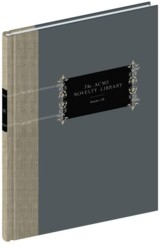
1. ACME Novelty Library #20 by Chris Ware. I look forward to a new edition of ACME Novelty Library more than anything in comics. I don't read it right away, though. I like to wait until the right time and the right place and, this year, I blew that. I read it at work. I wasn't planning on it, but I had it and... well, it was read. Sitting at a desk while waiting for more shipments to come in for me to clear. Maybe because I want it to be, it feels appropriate that I read it that way. Like The Outfit, this year's edition of ACME Novelty Library could only have been a comic. The way that Ware uses each page to give us a glimpse into that year of Jordan/Jason's life, the way he layers the pages, and uses the lettering and the colours... it all screams COMIC BOOK! In some ways, this is a cute story. It's a gimmick. One page, one year. It could be cold and superficial, but it somehow reaches into depths, partly because we just get these brief glimpses. We don't see the whole picture, we see as Jordan/Jason misremembers things, how he changes... only two pages ago he was a complete jerk! Now his family's been abandoned! Now he's got a new one! It all happens so fast that it's jarring. It's shocking. What seems to take forever in real life, happens by small increments and steps... it's just done here.

Ware's art is some of his best here. His usual style is represented, but he also delivers work in a few different styles. The looser, proto-style that he uses for birth and the early years, the incredibly nuance and deep art he uses for a photograph later in the book... the art for Jordan/Jason's son's book... he pushes himself and tries to evolve with the life he's showing us. Using one style and doing things in one way would be wrong almost. The art reflects the man.

I've been trying to think about the larger construction of the "Rusty Brown" story and I can't see it yet. How does this book fit into a single narrative with #19? With #17? How does it fit together besides associations? Or is that all? "All"... like that's not enough. Like associations aren't everything sometimes. I'm not sure I can tell you really why this is my favourite comic of 2010. Yes, it's the level of craft. Yes, it's the depths of emotions. Yes, it's the formal playfulness that appeals to me. But, there's more there. I say this every year, but when we get into the top five or so, we're really just splitting hairs. It's instinct and quick judgment calls that determine the order. This being the number one book feels right. And that's good enough for me.

Thanks for reading. Later.

Saturday, January 10, 2009

Best of 2008: The Top Ten

Finally, the top ten list. I want to make it quite clear that this is, obviously, based on my personal taste. I will do my best to justify said taste. This is a list featuring the comics I've read this year and came out this year, no reprints of easily obtained material that happened to come out in 2008. As well, I know, I know, I know, I need to broaden my reading habits a bit, but, honestly, money was tighter this year than usual and it's a lot easier to go to the shop each week and buy twenty bucks in singles than it is to buy one twenty buck book, especially with my CBR gig. I didn't always go to the shop weekly, but a couple of things made me begin, which made buying more books easier and, yeah, my "original graphic novel" depth really slid this year (not that it was generally that large), but, hey, if a work that I missed is truly great, I have no doubt that I will, at some point, read it. While I may not have done so right when it came out, I will read it at some point. Hell, I just read Chester Brown's The Little Man! Took me long enough, but I got it. And I will slowly get everything else.

That said, I apologise for nothing. And let's get on with it.

10. Batman by Grant Morrison, Tony Daniel and others. While the results weren't always as great as expected or wanted, the journey was very, very engaging. "Batman R.I.P." and the mystery of the Black Glove engrossed readers, especially ones like me. Each issue was an event unto itself as new clues arrived and new discussions were had. Now, does this book rank here probably more for the reaction I had to it and the fondness for the discussion that it produced than its actual quality? Sure, but those effects are part of the book's quality and that's why it makes my top ten. This was the discussion comic of the year and, as I said, one of the few that genuinely made me anticipate each and every issue. Batman was often the first comic I read each week, because, dammit, I wanted more information! I often considered reading it on the bus (I don't read comics on the bus--and, no, not because I'm ashamed, but because I don't find it comfortable because of their size and the manner in which they're put together physically), which I rarely do.

As for the actual story, I find Morrison's take on the character very interesting, although it's not one that I actually agree with. However, Morrison doesn't just use his Super-Batman, he provides reasons why Batman is so unique, so determined, so better than everyone else. In his final two issues, we pretty much discover that Batman's superpower is the ability to deal with more bullshit and craziness than anyone else. He is a human trauma absorber--and said trauma just makes him more determined and stronger. He has been able to live seventy years of experiences in only a decade... and it's, again, just made him better. Interesting ideas.

The duality of the Joker and Batman was a big draw for me here. Morrison's conception of that duality is cool as it's very similar to the duality of Professor X and Cassandra Nova in his New X-Men run, where, for the Joker, there's just him and Batman. When Batman shot him in the face, it didn't matter that it wasn't the "real" Batman, because it was Batman! In the dream world where Bruce Wayne never became Batman, the Joker is executed for his murders, because, without Batman, he cannot survive. Pairing the two in an intimate manner isn't new, but suggesting that they are the only two real people in the world is--especially suggesting that who wears the cowl doesn't matter, the same way that the Joker's personality doesn't matter: if he's in a costume, he's Batman, and if he's got pale skin, green hair and is batshit insane, he's the Joker.

I could continue, but none of this really justifies this spot for the book beyond "I anticipated each issue more than any other comic." If that doesn't tell you why this book deserves a spot here, I don't know what will.

9. glamourpuss by Dave Sim. This is my first real exposure to Dave Sim's work having never read Cerebus (it's on the list and I can easily see myself going on a mad spree at some point and obtaining all of the phone books) and it's quite something. Sim's exploration of Alex Raymond's photorealist art and its evolution is oddly engaging. I didn't expect to enjoy this book as much as I am. Honestly, I planned to give it a shot, because Sim is a legitimately important figure in modern comics and this was his latest project and who doesn't jump on board something like that? But, it's been a very enjoyable read... for the most part. His "essays" (for lack of a better word) on Raymond are really fun and accessable, even for those of us who don't know a lot about art. Sim's reproductions of Raymond's art are also very beautiful.

Where the book goes off the rails sometimes is in the fashion magazine parodies, which can be funny, but also have those bits of misogyny. Although, I haven't found these elements nearly as problematic as some, which makes me wonder if Sim's past statements on women and his reputation cause some to take this stuff in a harsher light than intended. The only issue that I'm not quite sure about is the one regarding anti-depressents and the amount prescribed to women--some things Sim says there I agree with, while others I don't. But, it's actually pretty easy to look past this stuff when the other parts of the comic are as good as they are.

The one spot where I take issue is the mocking of readers that Sim occasionally engages in over the amount of scantily-clad women featured in issues and that it's wrong to look at them... but he's the one drawing them. I know, it's meant to be in good humour, but a few of the jokes just seem really out there.

Overall, this process/parody book is unlike anything else out there, not just in content but in format, too. It may not cohere together in completely satisfying single issues, but it has yet to let me down.

8. Captain America by Ed Brubaker, Steve Epting, Mike Perkins, Butch Guice, Luke Ross and others. I don't honestly know what to say about Captain America. It's a great thriller with action, politics and some solid meditation on the effect our pasts can have on our presents. The art is remarkably consistent, due to actual intelligence and effort put into making sure it's consistent. That's actually something about Captain America I find frustrating only because no one else seems to be learning from it. I hate, hate, hate it when something new and smart comes along and no one bothers to notice and go "Hey, that is a much better way of doing things!" Sure, it brings back memories of house styles, but the style here is an interesting and dynamic one. Fuck, it's just so obvious.

Otherwise, this book continues to be great as this year focused exclusively on James Barnes as Captain America--and it's more interesting than when Steve Rogers wore the costume. Barnes has a girlfriend and passion and inner conflict and, really, is a much more complex character, one I'd rather read about. Brubaker hasn't just made Barnes a plausible Captain America, he's made me dread the idea of Steve Rogers coming back.

7. Omega the Unknown by Jonathan Lethem, Karl Rusnak, Farel Dalrymple and Gary Panter. This is a book that I don't know how to describe. I haven't had a chance to read the whole thing since it was published. Well, that's a lie. I've had dozens of chances, I just haven't. And it's not a secret sign that I don't like it, it's for that same reason I don't reread Crime and Punishment: it's daunting and it's demanding, and I just haven't felt like devoting my mental energies to something I've already read like that just yet. But I will, hopefully soon, because this was a wonder of a book. I still can't believe that Marvel published it, it's such a departure and only works to make most of their output look awful by comparison.

This is a book about loneliness and camaraderie. It's a fun take on concepts like the Green Lanterns, but also very grounded. The final issue is a true work of beauty and art, delivering a conclusion totally unexpected yet totally appropriate. I don't really know what else to say. I've never read the original Omega the Unknown and kind of feel like, when I do, I won't like it nearly as much--sort of like when you see the remake of an old movie and then watch the original to discover that, surprise surprise, the remake actually is better! It doesn't happen often, especially in "mainstream" superhero comics, but I think it may have here.

6. Aetheric Mechanics: A Graphic Novella by Warren Ellis and Gianluca Pagliarani. The overall execution of this graphic novella is pretty much perfect. It's expansive yet intimate, focused yet general, and it's got an ending that still blows me away. It's not original in anything other than the combination of ideas and execution. I would be lying if I said that the ending isn't a big reason why this book ranks this high, because it's one hell of an ending. Probably the best ending I've ever seen in a Warren Ellis comic. This book even has a perfect panel. There is a panel near the end of the book that is absolutely perfect in every respect, including the lettering (and how often is lettering considered perfect?).

Aetheric Mechanics is one of Ellis's Apparat books where he explores ideas quickly and without any intention of a follow-up. It began with the Apparat Singles Club, four first issues to comic series that don't exist and now he's in phase two where he tests out the "graphic novella," which falls somewhere between a single floppy issue and a graphic novel, much like a novella is between a short story and a novel. That Ellis is using pulp roots and, here, Sherlock Holmes roots really works with the idea of the format.

This book is much more than Sherlock Holmes homage and much more than just Sherlock Holmes meets science fiction... it falls very much in line with Ellis's other works with Sax Raker fitting in alongside a lot of Ellis's previous creations, especially his detectives. Notice how Raker examines the murder scene and you'll see visual connections with Frank Ironwine and others... Ellis likes his detectives human and his forensic people invisible.

But, really, this book explores a very big idea and how someone would react to it, and the reaction is both startling and completely logical. Plus, some fantastic art.

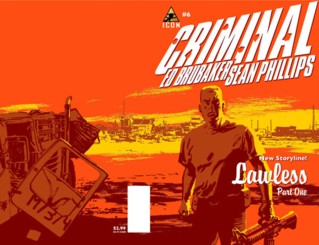
5. Criminal by Ed Brubaker and Sean Phillips. In issue two, "A Wolf Among Wolves," Teeg Lawless blacks out a lot when he's drinking and we get black panels, sometimes several in a row, but here's the thing: they're never the same size. The black-out panels are never the same size. That may not seem like a lot, but that is huge, that is genius, that is demonstrating something unique: what other medium can have multiple scenes blacked out, but signify that the times of each is different without breaking the black-out mood? (And can someone say that better, please?) Granted, none of the other six issues that came out this year could quite match the brilliance of that second issue, but the book is still pretty damn good.

Three self-contained-yet-linked stories and one four-part one, all centred on crime in a great noir tradition, all told by two people at the height of their craft and using every trick they can think up. This year (and in 2007, too), I'd read other people's thoughts about this book and a lot of people would say that, yeah, Brubaker and Phillips go really good noir, but so what? I know that wasn't meant as genre snobbery, but I always find that shit funny. No one thought Raymond Chandler was all that literate or grand at the time, either (and I know, two different things), but, hey, whatever.

The three self-contained-yet-linked stories set a high standard that I don't think "Bad Night" quite reached. It was a very good story no doubt about it, but those first three were better. I did love the end of "Bad Night," but I love my metafiction. But, "Bad Night" also played that trick where everything that came before suddenly seemed different and you just wanted to go back and read the whole thing over again. That's a very good trick, one that Brubaker and Phillips use very well here.

Honestly, I think Phillips is the better comic book creator (as I can't think of a better term) on this book and Brubaker does his damndest to keep up. Phillips may be the best artist working in "mainstream" comics right now and he's producing his best work ever on this book. His art alone may have secured a spot in the top ten (certainly the top twenty), but along with Brubaker's writing, Criminal is a must read.

4. Scalped by Jason Aaron, RM Guéra, and Davide Furno. If I begin reading a comic in trades, I don't usually begin buying it monthly. I hate having my books in multiple formats like that and, honestly, Vertigo books tend to get trade-waited no matter what. But, I got the first two collections of Scalped this year after reading about how fantastic a comic it is and then I put the book on my pull list, because everyone was right. The hype was no lie, the expectations were not raised beyond the ability of the creators, Scalped is a brilliant fucking comic and not buying it monthly would mean that I don't actually like comics. I'll say that right now: not reading Scalped month in, month out means that you don't like comics. Okay, strong words, because it may not be to everyone's taste, but that's not much of an excuse.

And, hey, I didn't think it would be to my tastes either. A comic about an Indian reservation. "Fuck that shit." I think I thought that sentence at one point. I really couldn't care less about a book set on an Indian reservation. Coming from Canada, I've had my share of literature about Native Americans/Canadians, mostly because 99% of it was awful, lots of cultural revisionism that promotes their culture as superior to the Western European one that I happen to fall into (and, trust me, the last thing I ever want to read is something that says that because I'm a white heterosexual male of Western European descent, I'm somehow an evil fucker--and, trust me, there's enough of that shit going around to make me wary of anything that may involve those ideas). But, you know, Scalped isn't about that. It's a crime comic. It could easily be set in a city, but it's set on a rez and it takes advantage of that to explore crime and its effect on people in different ways than an urban setting would allow. It's got bad guys that may be good guys and good guys that may be bad guys. It's heartbreaking in nearly every issue. It's slow, it's methodical, it's nasty and mean and cruel.

RM Guéra's art is a great fit for Jason Aaron's scripts. Guéra's art kind of reminds me of a crude Darick Robertson in that it can make you believe everything you see, but also does the grotesque well. Everyone looks real and unreal. It's really quite something.

You should read Scalped. I nearly didn't and, shit, what a mistake that would have been.

3. ACME Novelty Library #19 by Chris Ware. I relate to Chris Ware's books like those of no other cartoonist. That's probably not a good thing, is it? I'm sure I'm not the only one (I'm certain of it, actually), but it's still not something that is all that great. "Hey, I really relate to the people in Ware's horribly depressing meditations on loneliness and isolation! YAY ME!" You know? But, if there is one thing that attracts me to Ware's work it's that I relate to it quite a bit. But, I relate to it because he's so good at what he does. People focus a lot on his art, which is integral, but I think I pick up his books for the writing--not that the two are easily separated. I'm always amazed when so talented an artist is also so talented a writer. The writing here is some of the best I've read all year and, had someone else drawn Ware's script (assuming that was possible), I'm sure this book would still find a place on this list.

But, we also get the special treat of Ware's art, which is continually evolving to find new ways to express his ideas and to present pages. In every book, I see a good dozen page layouts that I have never seen before. In every book. How does he do that? I don't know why, but I tend to focus on page layouts and why certain artists pick specific layouts. For the first half of this book, Ware works in variations of eight panels by six panels, which he continues into the second part, but he then expands it into sixteen by twelve... it's really something to see how he uses all these different panel sizes to impact the story and the emotion of each panel. And his actual drawings, which wouldn't look out of place in a children's cartoon, but drawing these incredibly real and harsh stories of people who are lonely and selfish and awful in many ways... Remarkable.

What surprised me most was, in the first half, how well Ware does sci-fi and horror... I'm not familiar with a lot of his work pre-volume 16 aside from Jimmy Corrigan, so this is a big departure from his regular work for me. And it's just so damn good. Shockingly good.

2. Young Liars by David Lapham. I'm not sure I can write about this comic better than I did in my description for CBR: "Twisted, unpredictable, complex, layered, insane, manic, musical, and totally messed up, Young Liars is everything I always wanted in a comic book but never thought to ask for. David Lapham is producing career-best work in an already stunning career. Each issue brings about new shocking revelations and makes me want the next even more." I can try to say more about this wonderful book, but I'm rather content with that description. Besides, we're honestly in the territory where what makes one book rank higher than another is so intangible and difficult to describe that I don't know I can properly explain why I like this book more than everything else except for my number one pick. I can describe its positive qualities, maybe deliver a personal anecdote or two, try and describe that indescribable something something, but it won't happen. So read the above description and understand that I loved reading this comic book in 2008 more than every other comic book but one.

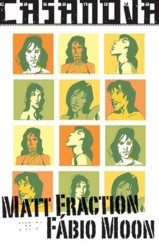
1. Casanova by Matt Fraction and Fabio Moon. And this is the one. What makes Casanova better (if I'm going to use a word...) than everything else? Like I said with Young Liars, it's hard to put into words, because we're at a point where the high level of quality has evened for everything. Just like Batman was a book I read right away, Casanova was always saved for last. I like to read my books with the best at each end (usually the "lighter" stuff at the front and the "heavier" stuff at the back--Young Liars, glamourpuss and Scalped get saved for last, too) and this book was always the last of the last.

In sixteen pages (more for issue 14), Matt Fraction and Fabio Moon packed in more story, more emotion, more drama that most books do in their six-issue story arcs. This title was my number one book in 2007, too, and it continued to be amazing in 2008. Issue 14 was a triumph in concluding a story, but issue 13 was so emotionally charged, so full of small moments that I may have liked it more--until I think about issue 14 and the way that the narration doubled for Casanova and Fraction, the way that the world became so real in so many ways, Kubarck's reaction to Casanova, the desire to die, the desire to live, the assurance that it will turn out okay in the end even though you don't quite believe it... I don't know. How do you put into words why something like this is so brilliant, how it affected you so much?

I reread the second year of Casanova the other day without reading Fraction's backmatter essays and it was brilliant, an absolute masterpiece of storytelling and story construction. Seriously, that final issue... my god.

So, Casanova is my favourite comic of 2008 and, you know what, when it returns in 2009, I'm pretty sure it will have a good chance of being my favourite comic of 2009. Because it is, because in ten years, people will still be talking about what Fraction and the Evil Twins accomplished here, trying to figure out how it all worked and what made it so great--and, come on, if they'll still be trying then, what hopes do I have now?

And those were my top ten books of 2008.

Sunday, November 09, 2008

Random Thoughts (Nov. 9 2008)

* The one comic that I really want to read, but haven't gotten a chance to get yet (for various reasons including money--or the lack thereof--and the shop not having a copy): ACME Novelty Library #19. I really hope to get a copy before the end of the year because my "best of 2008" list will be laughable without it. (Although, by some tastes, my list will be laughable even with it, so...)

* Currently rereading Paradigm for the first time as a whole. I haven't read an issue since it ended back in 2003 (cover dated November, so it's been five years). Have read the first four issues and... I've got to say, this is one weird comic. It goes where it wants, it lies to you, it tells you that it lies to you... It's also a dense read. I own all thirteen issues (both copies of the first one). The original first issue is autographed by artist Jeremy Haun, who I met at Wizard's Chicago con back in 2003. I also bought my "Fight for the sitcom" t-shirt from him then and have loved it ever since. In fact, it and my jacket (which I call The Jacket) are my two favourite items of clothing that I own. The 2003 Chicago con was also where I met Steve Higgins in person for the first time--and Steve is/was a big Paradigm fan. He has several letters printed in issues and I remember spending much of the Friday(?) night at the bar in Chicago talking to him. About what, I don't remember. Wow, that was over five years ago... it seems like forever ago, really. That night in the bar was kind of shitty since it was the hotel bar and I got in before they started carding people (I was only 20 at the time) and the bathroom was in the hotel proper, not the bar itself, so I couldn't leave to use the bathroom or else face not getting back in. Which meant I nursed a single pepsi the entire night. The irony was that I didn't drink back then (despite the legal age in Ontario being 19)... Other than that, it was a good time. But, back to Paradigm... Not sure if I'll write about it here quite yet. Steve should, though. But, I'm enjoying it quite a bit and it works really well when read together. I remember reading it monthly and getting lost here and there. The black and white hurts the book only in that Haun's art isn't always clear on who is who... The writing is a bit obtuse at times, too, but that's part of it. It's weird to think that I was reading this, Automatic Kafka and The Filth at the same time five years ago... I miss 2003.

* I'm rethinking how to go about discussing new comics here since I'm also doing review for CBR of many of the same books. I didn't bother with it this week since the only comics I bought were for reviewing purposes. Maybe I'll switch to extended discussions/reviews of the books I don't review at CBR. Then again, the purpose of those reviews is different from what I do here already. Who knows.

* A week or two back, I reread a lot of Grant Morrison's small mini-series. Marvel Boy, Flex Mentallo, WE3, Seaguy, and Vimanarama. The first four have been discussed a lot by various people, but I don't remember much time or effort spent looking at the last one. It was the third of the three three-issue minis Morrison did at Vertigo a few years back and was generally regarded as a disappointment after Seaguy and WE3. Vimanarama is a sort of cross between Indian culture and Jack Kirby... a superhero comic done with a Bollywood influence. It's understandable why it didn't catch on much, but it's not a bad read at all. Philip Bond does the art and it has some really interesting ideas... and fits well into Morrison's usual themes. A superhero who loses his powers because his one true love doesn't love him; an ordinary guy who becomes a superhero at the end; even an elevated plane of existence where words take the place of the items they refer to. Not a substantial work really, but a strangely forgotten one...

* Question: has anyone reading this gotten the recent Marvel Boy hardcover? If so, did Marvel simply reprint the previous collected version, which broke up a couple of double-page spreads (one of which was pages two and three of issue four) or did they insert a black page to maintain the original art as printed in the issues? Just curious.

Friday, January 25, 2008

Call for Papers on Chris Ware

Keep in mind that I am not at all affiliated with this CFP; I'm just sharing a message I received.

Call for submissions for _The Cult of Difficulty: Critical Approaches to the Comics of Chris Ware_, edited by Dave Ball, Dickinson College, and Martha Kuhlman, Bryant University.

_The Cult of Difficulty_ is a proposed collection of essays on the work of Chicago-based contemporary graphic novelist/comic book artist/cartoonist Chris Ware. Author of _Jimmy Corrigan, The Smartest Kid on Earth_ (2000, winner of the 2001 Guardian First Book Award), _Quimby the Mouse_ (2003), and _The Acme Novelty Library_ (2005), Ware has quickly emerged as one of the central figures in contemporary comics. We are currently seeking abstracts for 20- to 25-page articles that analyze Ware’s work, with particular interest in multi- and interdisciplinary approaches to his oeuvre. A university press has already expressed interest in this collection, and we are hoping to build upon the MLA panel on Ware’s comics this past December.

Essays that address the following questions are especially encouraged, but other topics are also welcome:

-- How do Ware’s texts raise questions about representations of race, gender, class, and disability? In particular we are eager to receive analyses of _Jimmy Corrigan_ and _Acme Novelty Library_ that engage with these topics.
-- How has Ware’s work as an editor, anthologist, and collector shaped the landscape of contemporary comics and informed his own corpus?
-- In what ways are questions of narrative and temporality engaged and complicated in Ware's texts? What insights do narratological and semiotic approaches offer to a reading of Ware’s comics?
-- How does Ware's work intersect with advertising culture, web sites, media, and packaging?
-- What is Ware's relationship to the literary canon (both in terms of graphic and conventional literature) and how does he re-imagine our relationship to the idea of literariness?
Please send 500-1000 word abstracts (or completed articles), c.v., and contact information in Word format to warecollection@gmail.com by March 10th.

Papers from a diversity of disciplinary orientations and methodological approaches are especially encouraged.

You may also contact Martha Kuhlman if you have questions: mkuhlman@bryant.edu

Sunday, January 06, 2008

Best of 2007: The Top Ten

Wow, the top ten books of 2007. Now, if you've been reading this blog all year most of my choices won't seem that surprising. There are a couple of books listed here that I didn't discuss because I got them within the past few weeks, knew they would make the list and didn't want to have to come up with twice as many great things to say about them. I'm lazy like that. Without further blathering, let's do this...

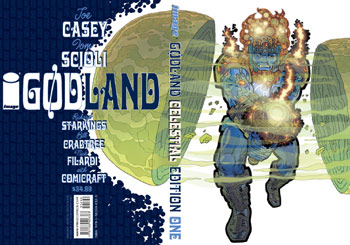
10. Gødland


For a while, I had this and The Black Dossier listed at the tenth spot, not knowing which to go with. In my discussion of The Black Dossier, I touched in the issue of energy and, let's face it, Joe Casey has energy. His books just scream energy, that he's writing the scripts at a frantic pace, gleefully laughing and just having the time of his life. Especially his creator-owned stuff like Gødland. This is Joe Casey and Tom Scioli doing Kirby Kosmic with a whole lot else thrown in. While the second year of this book hasn't been as strong as the first, it's still a fantastic read month in, month out (when it ships).

Not only that, but 2007 saw the release of the deluxe "celestial edition" hardcover collecting the first twelve issues of the book along with various extras including the usual sketches, development material and some nice words by the likes of Grant Morrison and Tom Spurgeon. If the regular issues didn't quite get the book on the list, this book did. Not exactly playing fair I know.

Gødland is all about Adam Archer, the first man to land on Mars and the fact that he came back with superpowers. This year featured stories revolving around a trio of cosmic baddies bent on destroying the planet--and fighting their growing human emotions--two recurring bad guys hunting down another, and Archer's attempted assassination by the US government because he won't shut up and do as he's told. It's classic superhero fun that recalls the Stan and Jack days if only because the book is done "Marvel style" with plot, art and then dialogue, which means some of the dialogue has that forced feeling, but Casey usually makes it work in his weird way.

All they need to do is get this book back on something resembling a monthly schedule and I'll be happy.

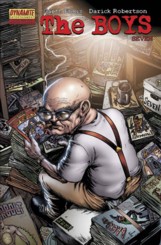
9. The Boys


Alright, more than any other book on this list, this book really isn't for everyone. The Boys is very much a hit or miss depending on your sensibilities. If you're a fan of Garth Ennis' work, odds are, you'll like this--but, even then, only if you have no problem with a Batman stand-in facing himself with the urge to randomly fuck things... anything really, not just people. In fact, if you find that a little funny, then, yeah, this book is for you.

The Boys follows a group of government agents (although that probably brings up the wrong image) whose job it is to keep the superpeople in line. The main arc of this year had them investigating the death of a young gay man, quite possibly at the hands of "Nightwing" who may or may not be gay.

Now, there are a lot of crude jokes at the expense of superhero and while I enjoy those, what gets me here, like with most of Ennis' work, is the basic humanity displayed. Ennis wisely uses Hughie as our way into this world, because he's a decent guy who is in this position because something horrible happened to him. He has no grudge, no taste for cruelty, he just wants to make sure that no one else is hurt the wa he was. And, ultimately, that's what this book is about: the horrible danger that superpeople present and the fact that, no, they aren't all great people like Superman and Spider-Man. And, sometimes, they need to be kept in line.

Oh, and Darick Robertson is on art and, my god, can that man draw. His art is the perfect complement to Ennis' writing here as Robertson can shift between parody and sincerity with ease.

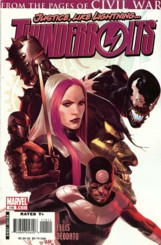
8. Thunderbolts


A government-sanctioned group of supervillains charged with hunting down superheroes who won't register is, well, a very, very retarded idea. If you sat down and thought about seriously implementing an idea like that, you would come to conclusion that villains wouldn't work well together, would wind up causing lots of death and destruction and, most likely, get their asses handed to them, because when do the bad guys ever actually win? Thankfully, that's the book that Warren Ellis writes. Thunderbolts changed directions a bit because of the Civil War "fanboy orgasm" moment where Tony Stark reveals that he's had the great idea of using villains to hunt down unregistered heroes, but the book tself does everything it can to critique and demonstrate that no one in their right mind would ever think to do something so stupid.

The team is run by the former Green Goblin, Norman Osborne and he's quite insane. It consists of a man whose sword handle is made from his dead sister's skin as that gives him special superpowers, a demented wannabe hero, a radioactive communist, a scheming sex-addict, a thug in a murderous alien suit, an S&M emo former teen hero, and an utterly insane assassin. Gee what ever could go wrong.

These guys have a problem taking down Z-grade heroes, because they don't have any teamwork skills and are lead by crazy people.

One of my favourite moments is when American Eagle just beats the shit out of Bullseye, because while Bullseye can hang with regular people, someone with superpowers is out of his league. This is after Ellis has built up how crazy and dangerous Bullseye is--he kills people with popsicle sticks and needs armed guards around him at all times.

As well, Ellis infuses the series with various portrayals of the media since the Thunderbolts is a PR exercise--so we get commercials for Thunderbolts action figures (as they fight the evil Captain America) or adds for a TV show about people trying to become a Thunderbolt or the next Captain America.

Not only that, but Mike Deodato's art is great here. A little too reliant on photo references at times, but I'm digging on it. Bonus points for reuniting the team that blew my young mind with Thor #491-494 and made me the Ellis follower I am today.

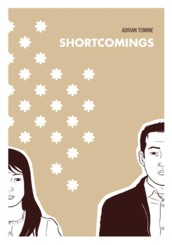
7. Shortcomings


I picked this up on Christmas Eve since Chapters was having a "buy 3, get 1 free" sale and I'd seen it around, heard all of the good things and, for some reason, just didn't get it until then. God, what a fucking stupid move. Usually, my instincts are pretty good, I can look at a stack of books/movies/CDs and pick out the good ones, but I almost blew it with this one. A fact I'm almost ashamed to admit: this is the first (and only) thing by Adrian Tomine I've read. Pretty stupid as the guy is good.

Shortcomings is all about Ben and his problems with women, namely the issue between Asian and white women. Ben is an Asian-American dating another Asian-American, but, apparently, wants to have sex with a white woman (although it's a little more nuanced than that). Tomine's writing is subtle and is full of well-rounded, seemingly complex characters. None of them come off as stock types, all do things that are stupid, mean or just plain contradictory. I'll admit that the fact that the book's lead is an underacheiving asshole won a few points.

I was also really impressed with Tomine's art. It's very clean and... sparse isn't the right word... maybe economical? He gives enough detail to make it look real, but also doesn't go overboard. He sticks to three tiers, creating a very easy-to-follow flow and steady pace.

I'm definitely going to have to check out his other work now.

6. ACME Novelty Library #18


I was a little disappointed that this year's issue of ACME Novelty Library didn't continue the "Rusty Brown" story from the previous two issues, but Chris Ware delivered on this new story. First off, let's just get his art out of the way. No one does the "cluttered," information heavy layout like Ware and he uses a very cartoony style that really works well. I particularly like the layouts of a couple of pages that show the main character in various layers like a medical textbook (which relates to what she's doing).

But, what got me here is the story. The young woman lead (only identified by nicknames--unless her name actually IS Nana, which I doubt because she's only called that while working as a nanny) is an amputee, missing part of her leg just above/below the knee. She once had a boyfriend and now she doesn't. She's very lonely. She used to be a nanny, but that didn't work out. Now she works at a flower shop. I guess I'm a bit of a sucker for these sad, lonely people stories, especially when as well-done as here. Ware does an excellent job of slowly revealing her story and her past, not giving too much away too soon, but also making sure it flows well. There are a few pages where it goes off the rails (usually accompanied by his more ambitious and confusing layouts), but, for the most part, it's a very engaging story. It will depress the hell out of you, but that's what Chris Ware does.

5. Captain America


Like everyone else, I'm really surprised at what holding this book back was, well, Captain America. Before Steve Rogers' death, this book was good, but, now, it's great. The fall-out of his assassination has been fantastic as Brubaker transformed the title in an ensemble piece of Cap's friends, allies and enemies, all reacting in various ways to his death.

Hell, I want to mention the art right away, too, because the work done here by Steve Epting and Mike Perkins blows me away. Compare Epting now to Epting mid-'90s Avengers and tell me that guy didn't, basically, become a whole new artist. Both of these guys deliver realistic, moody art that works at telling the story just as much as the writing.

One thing that really impressed me in this book is how Brubaker handles Tony Stark, because you would think, given the two sides of Civil War, that he would be almost a vaillain here when he's handled with a lot of respect and treated like a good guy doing what he thinks is best. Bruabker manages to rise above the "us/them" mentality that most of Marvel's output is stuck in, and shows that it isn't a right/wrong issue, but a difference of opinion, of viewpoints.

And what can I say about the Winter Soldier? Brubaker constantly surprises me with this character, but never does anything that doesn't make total sense. That's a really tough thing to do, to remain so consistent while surprising.

Quite possibly the best ensemble book out there right now (except for maybe my number one choice... and maybe number two, too... ah, fuck it, it's really good, whatever).

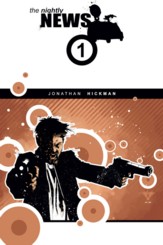
4. The Nightly News


I knew some people in high school who would have read this book, like, fifty times and quoted it and totally missed the point. You bet your ass they loved Fight Club and annoyed the hell out of me. But, that aside, this is one fine comic book magazine. Jonathan Hickman uses graphic design to tell this story rather than traditional comic art and it really works.

Basically, there's a cult that is killing off media figures, because they are the propaganda arm of the corrupt capitalist state or something like that. Normally, I'd be rolling my eyes because it's just so over-the-top, but Hickman makes it work somehow. I actually don't know how he does it, really. It's just one of those things where the right combination of elements produce a work of stunning beauty and skill. This isn't like any other comic out there right now.

Hickman manages to sneak in a lot of facts about the world, politics and the media, which really grounds the story and does make you want to side with the cult (or at least agree with some of their motivations). My favourite little jokes were how every issue had a little disclaimer from Hickman to warn us that he doesn't agree with the violence his characters enact and gives us a few reasons why he's a decent guy--except they become more deviant and "wrong" as the series progresses. Always made me laugh.

It's the best rant-as-comics of the year no doubt.

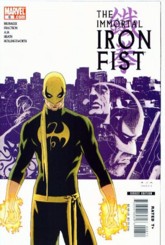
3. Iron Fist


The book that combines the two writers whose work I probably enjoyed the most this year, Ed Brubaker and Matt Fraction, and my favourite artist of the year, David Aja. Kung-fu billionaire, people!

Aaaaaaaaaand, you don't know this, but this book just dropped a spot. Originally, I had it here at number three and then switched it to number two and just now switched it back, because, well, issue seven wasn't that great. It was a good attempt to expand on the Iron Fist legacy, but... meh.

But, ignoring that issue, this comic rocks. It's full of wit and action and emotion and pain and hope and desire. This book is what the Mortal Kombat movie wanted to be, especially the most recent arc where the immortal weapons of the seven kingdoms all fight in a tournament--and, in his first fight, Iron Fist loses. Got his ass handed to him by Fat Cobra who we all love. And then there's Luke Cage, Misty Knight and Colleen Wing, who are all in other books, but kick ass here as Danny's back-up. Them fighting Hydra guys in issue six is pure magic, especially Misty yelling "Say 'Hail Hydra' one more time!"

I got the Essential Iron Fist before Christmas and just have to wonder, though, why Brubaker and Fraction don't use second-person narration. The book began that way and I think it could really work. But I digress.

David Aja is my favourite artist of the year. Everyday, I go to Newsarama and expect a news item telling me that he's been pulled off this book and put on Amazing Spider-Man or X-Men or New Avengers, some big franchise book, because he is just so goddamn amazing. He draws hand-to-hand combat in ways I didn't think possible while evoking mood and body language... there's a moment in one issue where Danny comes face-to-face with the previous Iron Fist and has his arms up, ready to fight and the way Aja draws that just amazes me every single time. It's... wow.

I really wish I was reading this book in trade form because whenever I finish an issue, I want the next one right now. But, it's also so good that I couldn't wait that long. Damn. It's an awesome book, read it.

2. Criminal


I think this book was what got me into watching and reading some noir stuff this past year. I'm also doing lists of the books (like prose books) I read this year and some of my favourite DVDs and there's a bit of noir on both, mostly Raymond Chandler. And I believe the quality of this book is what got me to dip my toe into those waters.

While I really enjoyed this book's first arc, the narration and construction of the second one, "Lawless," just blows me away. The third-person narrator Brubaker uses in it is fantastic and really works with the story--and is different from a lot of narration out there. I'm actually surprised we haven't yet seen some imitators who are realising just how good third-person narration can be. For the past several years, it's really just been first-person or location captions, not much else.

And Sean Phillips... what can you say about an expert craftsman doing the best work of his career? I don't know. I really don't. I tend to focus on the writing of comics because I can fake my way through, pretending like I know what I'm talking about, but here I just can't. Phillips is almost certainly doing things in every issue that I don't pick up on and that's a shame.

As well, I love the bonus stuff at the back. The text pieces on noir films has made me pick up a few and have several more on the list. I don't always read those pieces right away, but that makes it better, in a way, because it's always a nice surprise later.

The actual plots of Criminal aren't anything spectacular, this is a book more about style and craft. The characters are solid, as are the stories, but it's the way that the stories are told that wow me. But not as much as...

1. Casanova


I hate doing "best of" lists, because there are only so many ways to praise stuff. I've run out of adjectives and here we are at the number one spot. I guess the only way to really praise this book is to remind you of all of the great things I said about those other books and then point at this one and say, "This one beats them." Casanova tops my list and it had some stiff competition. Take all those other adjectives, combine them and then, like, add four and you'll have how awesome this book is.

First, Fraction and Gabriel Ba ended the first storyarc in a hugely epic way (giant robot), setting up a second arc that has defied all expectations. "When is Casanova Quinn?" Like Captain America, this book took the lead out of the book and it's, somehow, become even better than before. The focus has shifted to Zephyr Quinn and Casanova's old buddies, now at odds and... well, I dunno what else because that's how far the story's gone. But there's sex and violence and lesbian sex and witty dialogue and new great art by Fabion Moon and BLUE! Bright bright blue colours that I love because I love blue.

Not only that, but every issue is 16 pages. Fraction and Ba/Moon do in 16 pages what most comics spend 22 pages not doing. Throw in Fraction's great backmatter essays and this is a book I save for last whenever I get it because I want to end on a high note. I totally love this book and if you aren't reading it... I just don't know how to finish that sentence properly.

I really wish I could think of more things to say, but there are just so many ways to call something great.

And that about does it for the top ten list. Hope you found it entertaining or worthwhile or, hell, baffling. As well, you'll want to check out the "best of 2007" lists at a few blogs worth checking out (although, as of right now, they're not all up, so keep checking back and reading them): Timothy Callahan's blog, Marc's Comic Hut, the Legion Abstract and Geoff Klock's blog. Compare, contrast, note what books get a mention at each place and maybe give those books a shot. I know I'll be picking up a few things based one what they've said already.